 Simple Family FinanceMaster Your Money, Live Better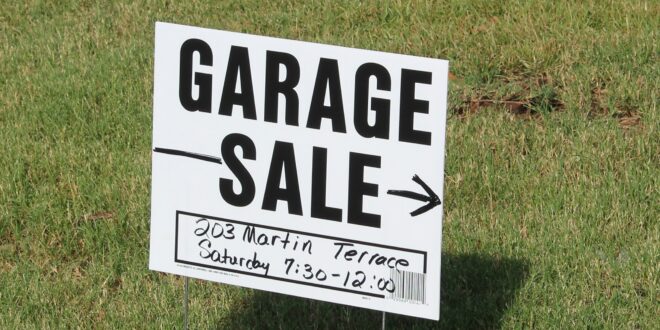

The 2026 Resale Economy: Turning Domestic Underutilization into Liquid Capital
In the financial landscape of 2026, the concept of “dead capital” has evolved far beyond vacant real estate or dormant bank accounts. As the French household savings rate stabilized at 17.4% in late 2025, a significant shift in wealth management emerged: the systematic monetization of physical assets. We observe that the secondary market in France has reached a record transaction volume of €9.2 billion in the first half of 2026, driven by a cognitive shift where retail investors view household surpluses not as clutter, but as a diversified entry point for liquidity. The modern garage sale, or vide-grenier, has transitioned from a casual weekend activity into a structured micro-investment strategy. With inflation cooling to a steady 2.1% in 2026, the purchasing power gained from optimizing these sales provides a non-taxable “alpha” that many households are now redirecting into fractionalized ETFs or crypto-assets via neo-brokers.
We have noted that the psychological aversion to “parting with possessions”—long a barrier to liquidity—has been superseded by the “utility-per-square-meter” metric. In 2026, every square meter of storage in urban centers like Paris or Lyon represents an opportunity cost of approximately €15 to €45 per month. Therefore, mastering Essential Garage Sale Tips for Maximizing Your Profits is no longer just about tidying up; it is a sophisticated exercise in inventory management and capital rotation.
The 2026 Regulatory and Fiscal Framework for Peer-to-Peer Divestment
Navigating the legalities of asset liquidation is paramount for the informed seller in 2026. Under the current French Tax Code (CGI), the distinction between occasional sales and professional trading has been sharpened by the 2025 Finance Act. We must remind our readers that while the sale of personal effects is generally exempt from capital gains tax, the “Vinted Tax” regulations—fully automated since 2024—require platforms and physical organizers to report transactions to the Direction Générale des Finances Publiques (DGFiP) once certain thresholds are met. In 2026, the reporting threshold remains at €3,000 in cumulative annual sales or more than 20 transactions. However, as long as the items sold are part of one’s private estate and not purchased specifically for resale, the profit remains non-taxable for the vast majority of households.
Technologically, the integration of “Instant Payment” protocols (SCT Inst) has revolutionized the garage sale floor in 2026. Gone are the days of carrying heavy cash boxes; 84% of transactions at organized 2026 fairs are settled via QR-code-based instant transfers or peer-to-peer apps like Lydia or Wero. This digitalization has reduced the average transaction time to under 10 seconds, significantly increasing the “velocity of sales” during peak morning hours. Furthermore, wealth aggregators now allow users to scan their physical inventory to estimate “market value” based on real-time 2026 data from global secondary marketplaces, ensuring that sellers do not undervalue rare collectibles or vintage electronics.
Comparative Yield Analysis: Asset Liquidation vs. Traditional Micro-Savings
To understand the financial impact of Essential Garage Sale Tips for Maximizing Your Profits, we must compare the immediate liquidity generated by a high-performance garage sale against the returns of standard 2026 financial vehicles.
| Investment/Action | Estimated 2026 Return | Risk Profile | Liquidity Timeline | Taxation (French Resident) |
|---|---|---|---|---|
| Optimized Garage Sale | €500 – €2,500 (One-off) | Low (Inventory Risk) | Immediate (T+0) | 0% (Personal Assets) |
| Livret A / LDDS | 3.00% p.a. | Zero | Immediate | Exempt |
| MSCI World ETF (via PEA) | 7.5% – 9.0% (Projected) | Moderate/High | T+2 (Days) | 17.2% (Social Levies) |
| Euro Private Equity Fund | 10% – 12% (Target) | High | 5-8 Years (Locked) | Flat Tax 30% or PEA |
As demonstrated, the “yield” on a well-executed garage sale is immediate and tax-free, providing a unique influx of capital that can be used to “lump-sum” into more volatile 2026 markets. While the risk is low, the “execution risk” lies in poor pricing or logistics, which can lead to unsold inventory and wasted time.
Debunking Myths: The Reality of Secondary Market Valuation in 2026
In our observations of market behavior, we have identified three critical misconceptions that prevent sellers from achieving peak profitability.
- Myth 1: “Sentimental value translates to market premium.”
Reality: In 2026, the market is strictly utility-driven. Data from 2025 shows that items priced 20% above “fair market value” due to emotional attachment have a 90% failure rate in physical sales. We recommend using “blind pricing” tools to remain objective. - Myth 2: “Cash is the only way to ensure a secure transaction.”
Reality: With the rise of counterfeit detection in 2026, digital peer-to-peer payments are actually safer. 12% of cash transactions in high-volume 2025 markets involved currency discrepancies. Digital logs provide an audit trail for your 2026 tax declarations if needed. - Myth 3: “Large items (furniture) are the biggest profit drivers.”
Reality: Logistics costs and “buyer friction” often eat into furniture margins. In 2026, the highest margins are found in “Small Caps”—niche electronics, vintage fashion, and out-of-print media—which boast a 40% higher turnover rate per square meter of stall space.
Expert Observatory Q&A: Optimizing Your 2026 Liquidation Strategy
How should I price my items to ensure a 90% sell-through rate by noon?
We suggest the “60-30-10 Rule” for 2026. Price high-demand tech at 60% of its current refurbished market value, clothing at 30%, and general bric-a-brac at 10%. This creates a psychological “bargain trigger” that accelerates turnover. Remember, the goal is capital extraction, not inventory holding.
What are the specific insurance requirements for hosting a private garage sale in 2026?
Under French law, your Responsabilité Civile (Civil Liability) within your comprehensive home insurance (MRH) typically covers occasional sales on your property. However, we advise checking your 2026 policy updates, as some insurers have introduced “micro-commercial” clauses for sales exceeding two days in duration.
How can I reinvest my garage sale profits to beat the 2026 inflation rate?
If your profit exceeds €1,000, we recommend a split strategy: 50% into a tax-advantaged PEA (Plan d’Épargne en Actions) targeting low-cost trackers, and 50% into a high-yield savings account (Hysa) to maintain liquidity for future opportunistic buys. This balances growth with security in the 2026 economic climate.
Strategic Synthesis for the 2026 Investor
Maximizing profits through Essential Garage Sale Tips for Maximizing Your Profits requires a shift from a “clean-up” mindset to an “asset-liquidation” mindset. To succeed in 2026, we recommend the following actions:
- Audit: Use AI-driven valuation apps to identify high-alpha items before the sale date.
- Digitize: Adopt universal QR-code payment solutions to capture the 70% of 2026 buyers who no longer carry significant cash.
- Logistics: Focus on high-velocity, small-format items to maximize the “yield per hour” of your presence.
- Reinvest: Treat the proceeds as an investment contribution rather than “found money” for consumption.